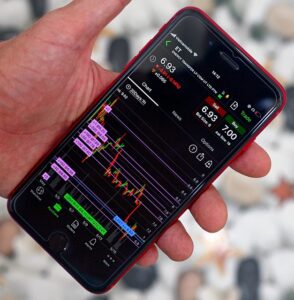
The Forex market is a vast, dynamic arena where traders seek to profit from currency price fluctuations. Among the myriad strategies employed, range trading stands out for its simplicity and effectiveness, especially in markets characterized by horizontal price movement. This article delves into mastering the Forex market by utilizing innovative range trading approaches to achieve consistent profits.
Understanding the Basics of Range Trading
Range trading is a strategy that involves identifying price levels at which a currency pair tends to trade over a period of time. The trader buys at the lower end (support) and sells at the higher end (resistance), capitalizing on the predictable price movements within these boundaries. Unlike trend trading, which seeks to ride a currency’s momentum in one direction, range trading thrives in sideways markets where there is no clear directional bias.
Key Elements of Range Trading
Identifying Support and Resistance Levels
The cornerstone of range trading is accurately identifying support and resistance levels. Support is the price level where demand is strong enough to prevent the price from falling further, while resistance is the level where selling pressure outweighs buying interest.
Traders can utilize various tools, such as pivot points, Fibonacci retracements, and historical price data, to pinpoint these critical levels. Accurate identification allows traders to set entry and exit points, minimizing risk and maximizing profit potential.
Using Oscillators for Confirmation
Oscillators, such as the Relative Strength Index (RSI) and Stochastic Oscillator, are invaluable tools in range trading. They help confirm overbought and oversold conditions within a range, offering additional validation for entry and exit points.
For instance, when the RSI indicates an oversold condition at a support level, it reinforces the decision to enter a long position. Conversely, an overbought reading at resistance can confirm the timing for a short trade.
Innovative Range Trading Approaches
Integrating Price Action Analysis
Price action analysis involves studying historical price movements to predict future behavior. By integrating price action techniques with traditional range trading, traders can enhance their strategy’s accuracy.
For example, candlestick patterns like doji or hammer at key support or resistance levels can strengthen the confidence in a trade. Analyzing volume alongside price action can also provide insights into the strength of a potential reversal.
Applying Mean Reversion Strategies
Mean reversion is the concept that prices will revert to their mean or average over time. In the context of range trading, this approach assumes that currency prices will oscillate around a central value, providing multiple trading opportunities.
Traders can use Bollinger Bands to visually represent price volatility and identify potential reversal points within a range. When prices touch or move outside the bands, it signals a possible reversion to the mean, aligning with the range boundaries.
Implementing Automated Trading Systems
Modern technology has enabled the development of automated trading systems, or “bots,” which can execute range trading strategies with precision and speed. These systems can be programmed to recognize specific patterns, manage trades, and apply risk management techniques without human intervention.
By removing emotional bias and executing trades based on predefined criteria, automated systems can enhance consistency and efficiency in range trading. Traders must backtest and optimize these systems to ensure they align with their risk tolerance and profit goals.
Risk Management in Range Trading
As with any trading strategy, risk management is crucial in range trading. The use of stop-loss orders is essential to limit potential losses when a price breaks out of the identified range. Setting take-profit targets at the opposite boundary ensures profits are secured before a reversal.
Position sizing is another critical aspect, where traders determine the amount of capital to risk on each trade. By adhering to a consistent risk-reward ratio, traders can protect their capital and sustain profitability over time.
Adapting to Market Changes
Although range trading is effective in sideways markets, traders must remain adaptable as market conditions change. A range can eventually break, leading to a new trend. Traders should be vigilant and ready to adjust their strategies to capitalize on emerging trends or avoid unnecessary losses.
Regularly reviewing and analyzing past trades can provide insights into strategy effectiveness and areas for improvement. Keeping abreast of economic news and geopolitical events can also help traders anticipate shifts in market dynamics.
Conclusion
Mastering the Forex market through innovative range trading approaches requires a blend of technical analysis, strategic planning, and disciplined execution. By understanding the fundamental elements of range trading, integrating advanced techniques, and maintaining robust risk management practices, traders can achieve consistent profits.
Whether leveraging price action insights, applying mean reversion strategies, or utilizing automated systems, the key to success lies in adaptability and continuous learning. As traders refine their skills and adapt to market changes, they can unlock the potential of range trading as a powerful tool in their Forex trading arsenal.
#ChatGPT assisted in the creation of this article.