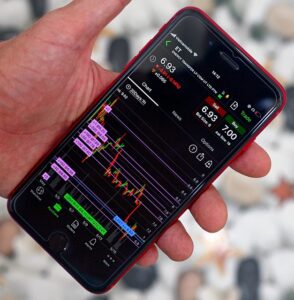
In the fast-paced world of Forex trading, traders are constantly in search of reliable and straightforward strategies to maximize their profits. One such strategy that stands out for its simplicity and effectiveness is the Moving Average Crossover Strategy. This guide will delve into the intricacies of this strategy, providing you with the knowledge and tools needed to master it. Whether you are a novice trader or a seasoned professional, understanding the Moving Average Crossover Strategy can significantly enhance your trading performance.
Understanding Moving Averages
Before diving into the crossover strategy, it’s crucial to comprehend what moving averages are and their significance in Forex trading. A moving average is a statistical calculation used to analyze data points by creating a series of averages of different subsets of the full data set. In trading, moving averages are utilized to smooth out price data, providing a clearer view of the market trend over a specified period.
Types of Moving Averages
There are several types of moving averages, but the two most commonly used in the Moving Average Crossover Strategy are the Simple Moving Average (SMA) and the Exponential Moving Average (EMA).
Simple Moving Average (SMA): The SMA is calculated by adding the closing prices of an asset over a certain period and dividing the total by the number of periods. This method gives equal weight to all data points in the calculation.
Exponential Moving Average (EMA): The EMA assigns greater weight to more recent prices, making it more responsive to new information. Consequently, it tends to be favored by traders looking for quicker signals.
The Basics of the Moving Average Crossover Strategy
The Moving Average Crossover Strategy is a trend-following strategy that capitalizes on the potential for profit when a short-term moving average crosses a long-term moving average. The crossover is a signal that a change in trend might be occurring.
How It Works
The strategy involves two primary components:
- Short-Term Moving Average: Typically, this could be a 5-day or 10-day moving average, representing more recent price action.
- Long-Term Moving Average: This is generally a 50-day or 200-day moving average, indicating the broader trend.
The crossover occurs when the short-term moving average crosses above (bullish crossover) or below (bearish crossover) the long-term moving average. A bullish crossover suggests a buying opportunity, while a bearish crossover indicates a potential selling opportunity.
Implementing the Moving Average Crossover Strategy
Selecting the Right Currency Pairs
The effectiveness of the Moving Average Crossover Strategy can vary depending on the currency pairs being traded. It’s advisable to select major currency pairs with high liquidity, such as EUR/USD, GBP/USD, or USD/JPY. These pairs tend to exhibit more consistent trends, which is essential for the success of this strategy.
Choosing the Time Frame
The time frame you choose can significantly impact the results of the Moving Average Crossover Strategy. Shorter time frames, such as 15-minute or 1-hour charts, can provide more frequent signals but may also result in more false positives. Longer time frames, like daily or weekly charts, offer more reliable signals but may miss shorter-term opportunities.
Setting Up Your Charts
To set up your charts for the Moving Average Crossover Strategy, follow these steps:
- Select the currency pair and time frame you wish to trade.
- Add a short-term moving average (e.g., 10-day EMA) to your chart.
- Add a long-term moving average (e.g., 50-day SMA) to your chart.
- Monitor the chart for crossover signals.
Identifying Entry and Exit Points
Once your charts are set up, it’s time to identify entry and exit points based on crossover signals:
- Entry Point: Enter a buy trade when the short-term moving average crosses above the long-term moving average. Conversely, enter a sell trade when the short-term moving average crosses below the long-term moving average.
- Exit Point: Consider exiting the trade when the moving averages cross again in the opposite direction, or use additional technical analysis tools to confirm exit signals.
Advantages and Limitations of the Moving Average Crossover Strategy
Advantages
The Moving Average Crossover Strategy offers several advantages:
- Simplicity: The strategy is easy to understand and implement, making it accessible for traders of all skill levels.
- Trend Identification: By using moving averages, traders can quickly identify emerging trends and capitalize on them.
- Versatility: The strategy can be applied to various time frames and currency pairs.
Limitations
Despite its advantages, the Moving Average Crossover Strategy has some limitations:
- Lagging Indicator: Moving averages are lagging indicators, meaning they are based on past price data and may result in delayed signals.
- False Signals: The strategy can produce false signals, particularly in ranging or choppy markets.
- Not Suitable for All Market Conditions: The strategy is most effective in trending markets and may underperform during periods of low volatility or sideways movement.
Enhancing the Moving Average Crossover Strategy
To improve the effectiveness of the Moving Average Crossover Strategy, traders can incorporate additional tools and techniques:
Combining with Other Indicators
Consider using other technical indicators, such as the Relative Strength Index (RSI) or the Moving Average Convergence Divergence (MACD), to confirm signals and reduce the likelihood of false positives.
Implementing Risk Management
Effective risk management is crucial for long-term success in Forex trading. Use stop-loss orders to limit potential losses and apply position sizing techniques to manage your exposure.
Backtesting and Forward Testing
Before implementing the Moving Average Crossover Strategy in live trading, conduct thorough backtesting using historical data to evaluate its performance. Additionally, consider forward testing in a demo account to gain confidence in the strategy’s effectiveness.
Conclusion
The Moving Average Crossover Strategy is a powerful tool in the arsenal of Forex traders. Its simplicity, combined with its ability to identify trends, makes it an appealing choice for traders seeking to maximize their profits. By understanding the nuances of this strategy, selecting the right currency pairs and time frames, and incorporating additional tools and risk management techniques, traders can enhance their trading performance and achieve consistent success in the Forex market.
As with any trading strategy, it’s important to remember that there are no guarantees in trading. Continuous learning, practice, and adaptation are key to mastering the Moving Average Crossover Strategy and thriving in the dynamic world of Forex trading.
#ChatGPT assisted in the creation of this article.