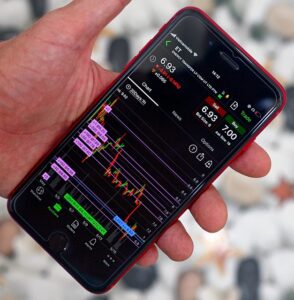
Fibonacci levels are a fundamental tool in the arsenal of forex traders, offering a mathematical approach to predicting potential market movements. Named after the Italian mathematician Leonardo Fibonacci, these levels are derived from the Fibonacci sequence, a numerical series where each number is the sum of the two preceding ones. In the realm of forex, Fibonacci levels are used to identify potential support and resistance levels, guiding traders in making informed decisions.
Understanding Fibonacci Retracement and Extension Levels
Fibonacci retracement levels are horizontal lines that indicate potential reversal points in a currency pair’s price movement. These levels are typically plotted at 23.6%, 38.2%, 50%, 61.8%, and 100%, based on the belief that markets tend to retrace a predictable portion of a move before continuing in the original direction.
Fibonacci Retracement Levels
– **23.6%**: This level is often used by traders as an initial gauge to see if retracement is shallow. A price that bounces off this level may indicate a strong trend.
– **38.2% and 50%**: These levels are considered significant retracement points, where the price often consolidates before resuming the trend.
– **61.8%**: Known as the “golden ratio,” this level is crucial as a potential turning point, offering a stronger indication of a trend reversal.
– **100%**: It represents the full retracement of the initial move, which can signal a complete reversal or the start of a new trend.
Fibonacci Extension Levels
Fibonacci extension levels are used to indicate potential areas where the price could move after a retracement completes. The common extension levels include 161.8%, 261.8%, and 423.6%. These projections help traders identify potential exit points for their trades.
Implementing Fibonacci Levels in Forex Trading
To effectively utilize Fibonacci levels, traders need to identify key swing highs and lows in the market. By drawing Fibonacci retracement levels from a significant low to a high (in an uptrend) or from a high to a low (in a downtrend), traders can spot potential retracement levels.
Combining Fibonacci with Other Technical Indicators
Fibonacci levels are most effective when combined with other technical indicators. For example, moving averages or trendlines can offer additional confirmation of potential support or resistance levels. When Fibonacci levels coincide with these indicators, the probability of a successful trade increases.
Using Fibonacci Levels for Entry and Exit Points
Traders often use Fibonacci retracement levels to identify potential entry points during pullbacks in a trend. Conversely, Fibonacci extension levels serve as targets for taking profits. By setting stop-loss orders below the retracement levels, traders can manage risk effectively.
Advanced Fibonacci Trading Strategies
While basic application of Fibonacci levels can be advantageous, mastering advanced strategies can significantly enhance trading success.
Confluence of Fibonacci Levels
One advanced strategy involves identifying the confluence of Fibonacci levels from different time frames. When multiple Fibonacci levels align closely, they form a stronger area of support or resistance. This confluence can be a powerful signal for entering or exiting trades.
Fibonacci Clusters
Fibonacci clusters occur when several Fibonacci levels from different retracements and extensions converge in a specific price area. These clusters highlight significant decision points in the market and can be used to anticipate major price movements.
Harmonic Patterns and Fibonacci Levels
Harmonic trading patterns, such as the Gartley, Butterfly, and Bat patterns, rely heavily on Fibonacci levels to define precise entry and exit points. These patterns combine Fibonacci retracements and extensions with geometric price patterns to identify high-probability trade setups.
Integrating Fibonacci with Elliot Wave Theory
Elliot Wave Theory, which analyzes market cycles and crowd psychology, can be complemented by Fibonacci levels. Fibonacci retracements and extensions help identify key wave counts and potential reversal points, adding precision to Elliot Wave analysis.
Risk Management and Fibonacci Levels
Effective risk management is crucial in forex trading, and Fibonacci levels can aid in setting stop-loss and take-profit orders. By utilizing Fibonacci retracements, traders can define risk parameters more accurately and protect their capital from excessive losses.
Stop-Loss Placement
When placing stop-loss orders, traders often set them just beyond a Fibonacci retracement level. This strategy allows for a buffer against market volatility while maintaining a favorable risk-reward ratio.
Take-Profit Targets
Fibonacci extension levels provide traders with clear take-profit targets. By exiting trades at these levels, traders can lock in profits while maximizing their gains from trending markets.
Challenges and Limitations of Fibonacci Levels
While Fibonacci levels are a powerful tool, they are not infallible. Traders must be aware of their limitations and potential pitfalls.
Market Noise and False Signals
Market noise and false signals can lead to premature exits or entries. Traders should exercise caution and combine Fibonacci levels with other indicators to filter out noise and increase the accuracy of signals.
Subjectivity in Level Selection
Selecting the correct swing highs and lows for drawing Fibonacci levels can be subjective, leading to variations in levels among traders. Consistency and practice are essential to improve accuracy.
Conclusion: Mastering Fibonacci Levels for Optimal Success
Mastering Fibonacci levels in forex trading requires a combination of technical knowledge, practice, and strategic thinking. By understanding the principles of Fibonacci retracements and extensions, traders can identify key support and resistance levels, enhancing their trading decisions.
Integrating Fibonacci with other technical tools, such as moving averages, trendlines, and harmonic patterns, can provide a comprehensive approach to market analysis. Moreover, effective risk management, combined with advanced Fibonacci strategies, empowers traders to navigate the complexities of forex markets with confidence.
In conclusion, Fibonacci levels offer a mathematical edge to forex traders seeking to optimize their strategies. By mastering these levels and incorporating them into a holistic trading plan, traders can unlock the potential for consistent success in the dynamic world of forex trading.
#ChatGPT assisted in the creation of this article.